A beetle, shot like a luxury object
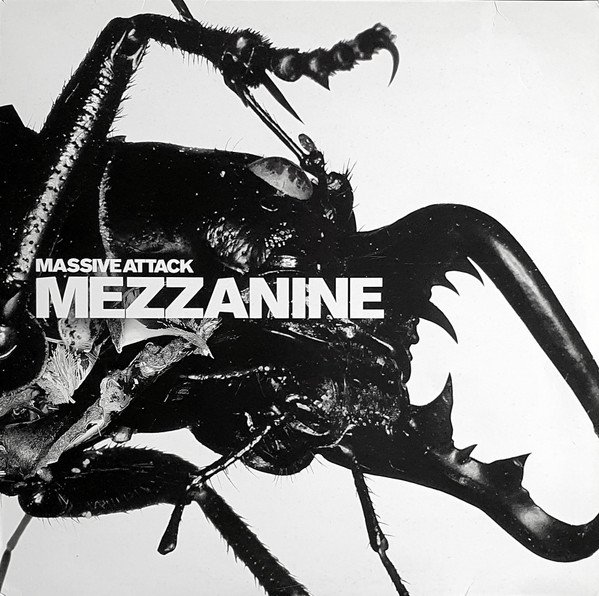
The Mezzanine cover is a glossy close-up of a beetle, photographed by Nick Knight. Hard, black and armoured, it matches the album's paranoid, metallic mood — beautiful and faintly menacing at the same time.
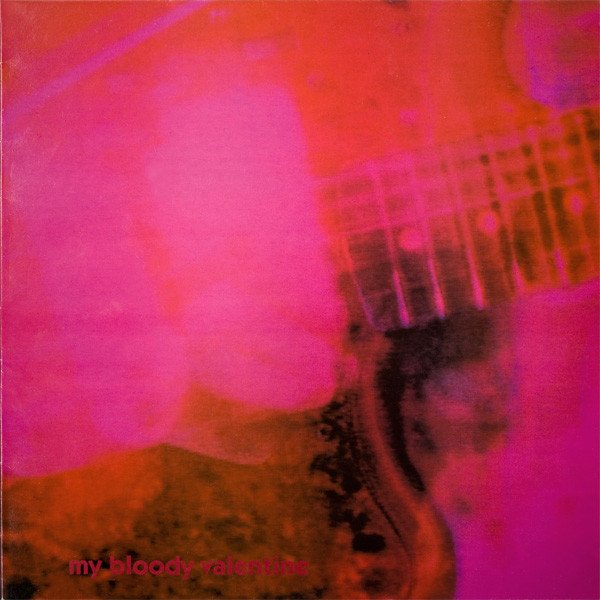
The image is a Fender Jaguar caught mid-strum and drowned in saturated pink motion-blur — the visual twin of the record's sound, where melody and noise smear into one another. You can barely tell it's an instrument, which is rather the point.
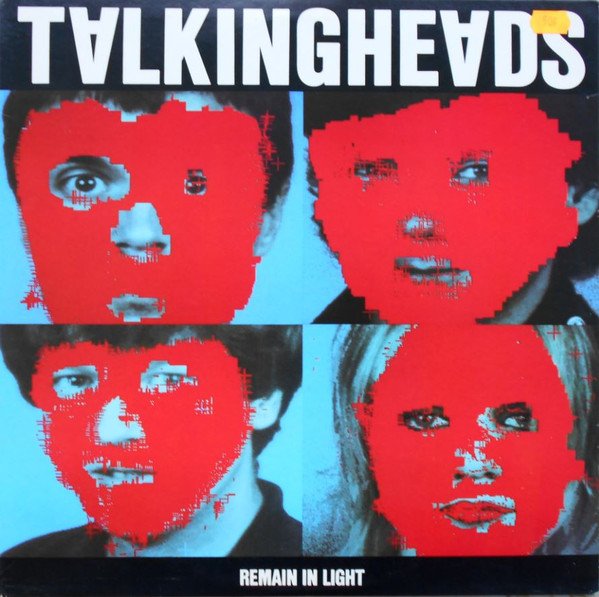
The band's portraits were processed at MIT and blocked out with solid red over the eyes — one of the earliest album covers made with computer image manipulation. Machine-made and faceless, it suited a record built from looping, interlocking grooves.
Selected Ambient Works wears the Aphex Twin insignia — the stark 'A' mark Richard D. James adopted as a personal sigil. Simple, symmetrical and faintly occult, it turned a bedroom-techno alias into a symbol you'd recognise anywhere, long before the music reached a wider world.
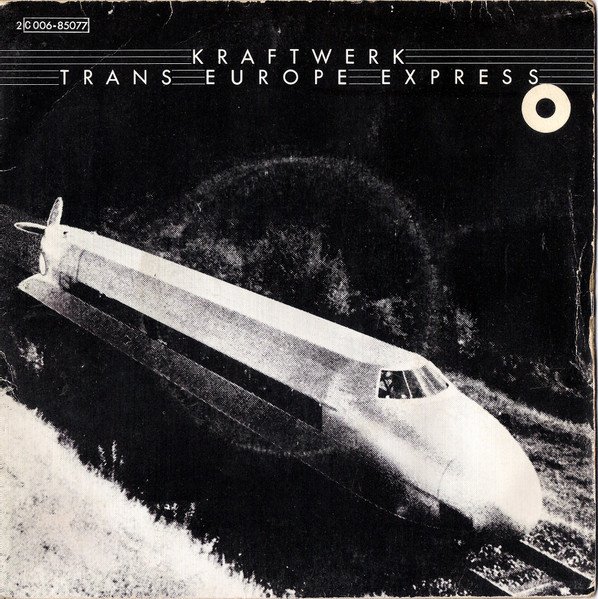
This French pressing puts the machine on the cover — a sleek, needle-nosed express gliding through the dark, rather than the mannequin band-portrait used on other editions. It's the perfect emblem for Kraftwerk's hymn to crossing a continent by rail: chrome, motion and modernist romance, years before anyone called it synth-pop.
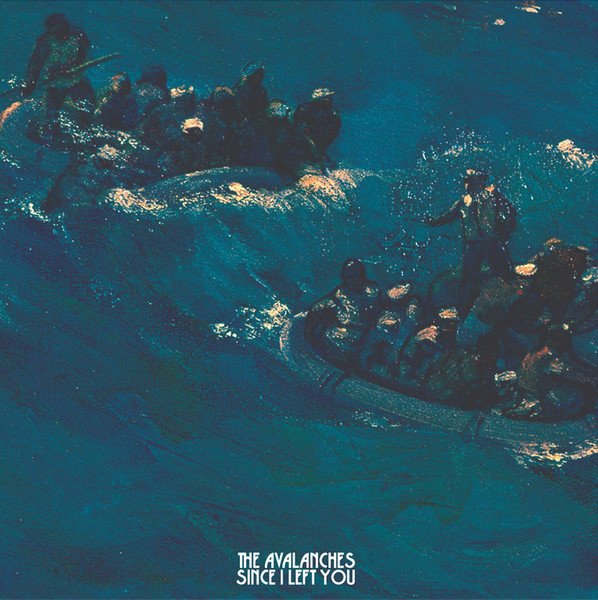
An album stitched together from thousands of samples wears a moody, deep-teal painting — little boats scattered across dark water. Cover and music share the same submerged, dreamlike logic: fragments drifting together from somewhere far away into something wholly new.
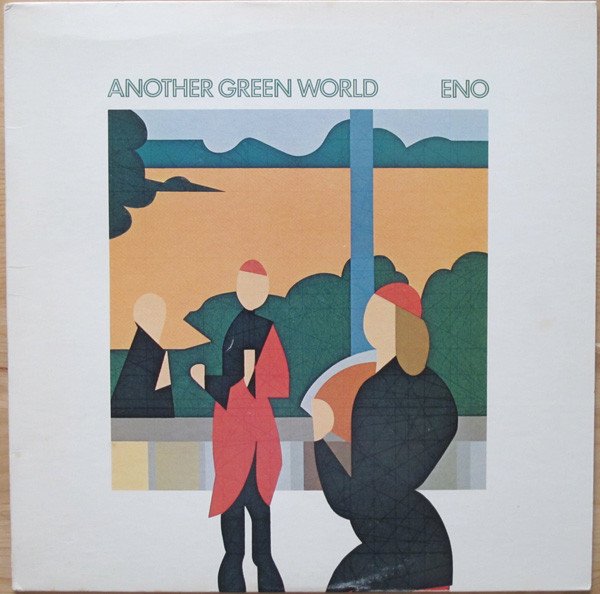
The cover is a small cropped detail from 'After Raphael' by the British artist Tom Phillips, a long-time Eno collaborator. Only a fragment of the larger canvas is shown — two figures against green — turning a full painting into a quiet, mysterious window.
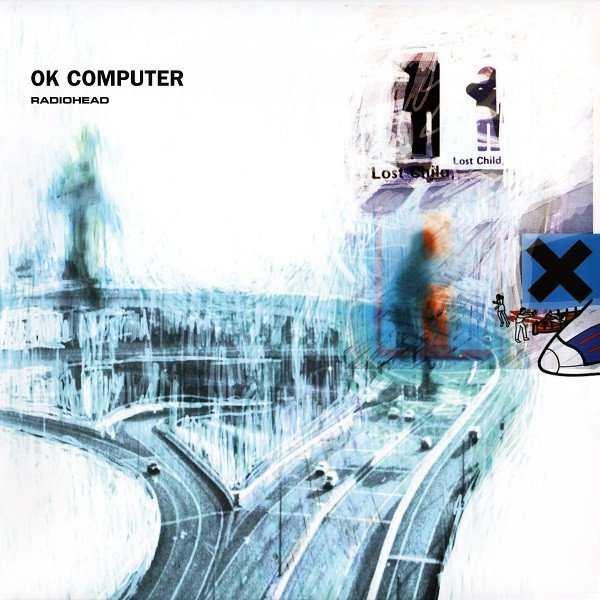
Stanley Donwood and Thom Yorke (signing as 'Tchock') built the artwork from bleached, over-layered images — motorways, connecting-flight diagrams, half-legible warnings — to picture a world moving too fast to feel. It set the template for every Radiohead sleeve since.
Klaus Dinger scrawled the NEU! name across the cover in hand-sprayed day-glo — part supermarket price-sticker, part graffiti. Years before punk, it was a piece of pure anti-design: the band's name as a loud, cheap, unforgettable mark.
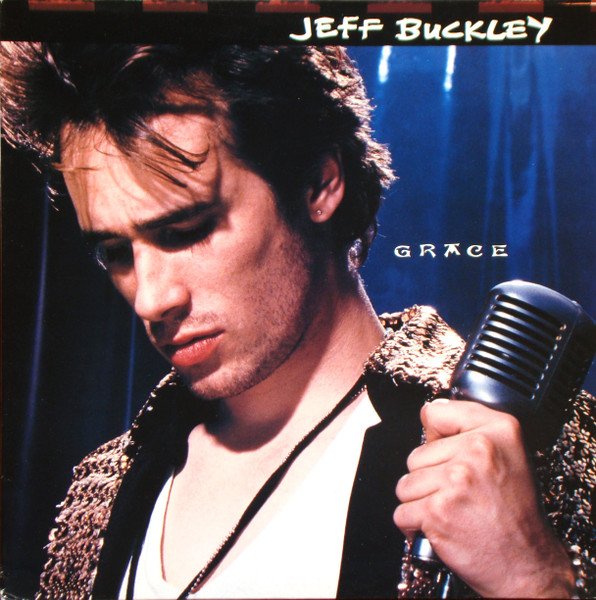
Merri Cyr's portrait catches Buckley eyes-closed, microphone in hand, mid-breath. Intimate and a little theatrical, it became the defining image of an artist who would release only one studio album in his lifetime.
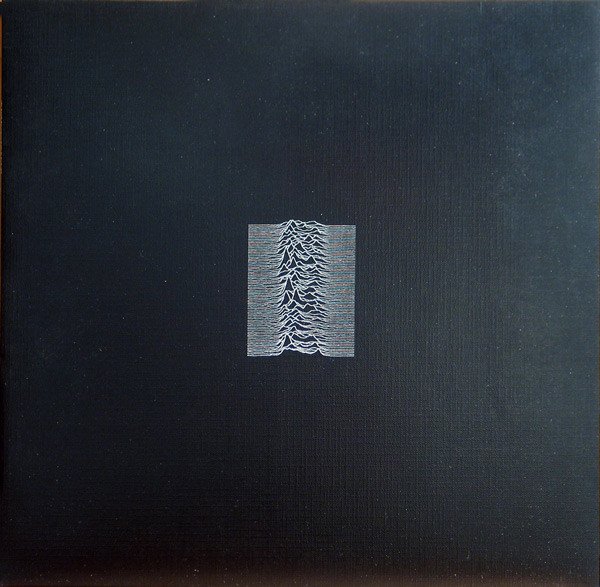
Peter Saville's sleeve is a stacked plot of successive radio pulses from pulsar CP 1919 — the first pulsar ever detected, found by Jocelyn Bell Burnell in 1967. Saville lifted the diagram from an astronomy encyclopaedia, flipped it white-on-black, and left the front entirely free of band name or title.
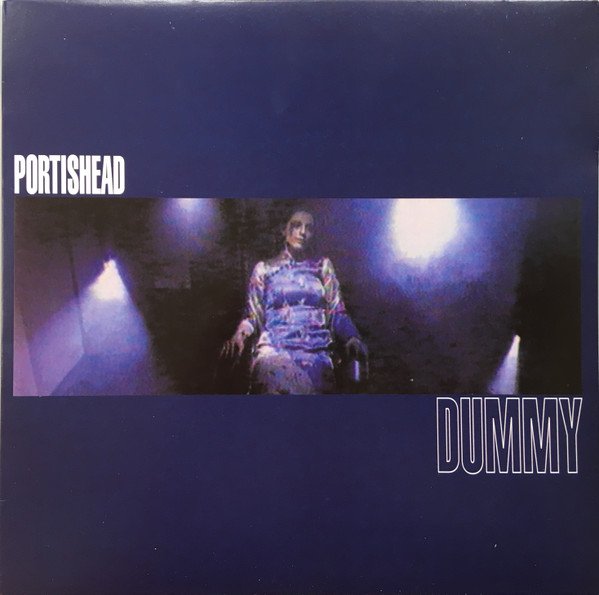
The Dummy sleeve is a frame lifted from 'To Kill a Dead Man', an eleven-minute spy pastiche the band wrote and scored themselves. The grainy, cinematic image announced trip-hop as film-noir for the ears before the genre even had a name.
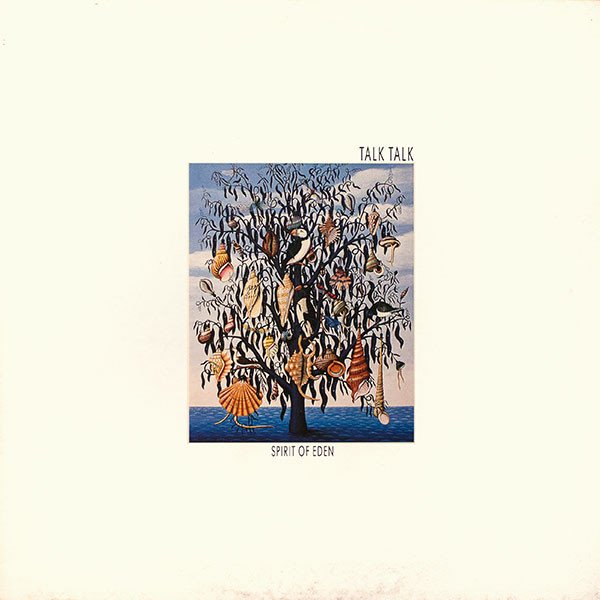
James Marsh painted the sleeve — a single tree hosting fish, birds and a floating eye against deep blue — in the meticulous, dream-logic style he brought to every Talk Talk cover. It mirrors a record that dissolves rock into something closer to chamber music and silence.
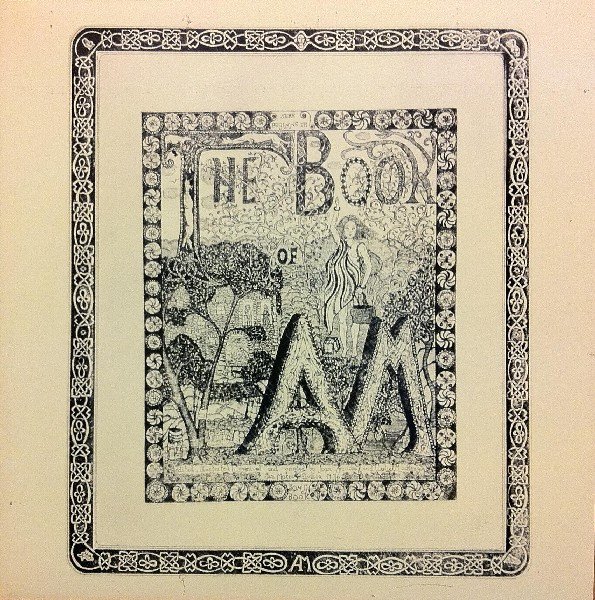
A private-press artefact from a 1970s spiritual community on Ibiza, The Book of AM comes wrapped in hand-drawn, manuscript-style artwork tracing a day from dawn to dark. Made far outside the industry, it's as much devotional object as record — which is why originals are so fiercely collected.
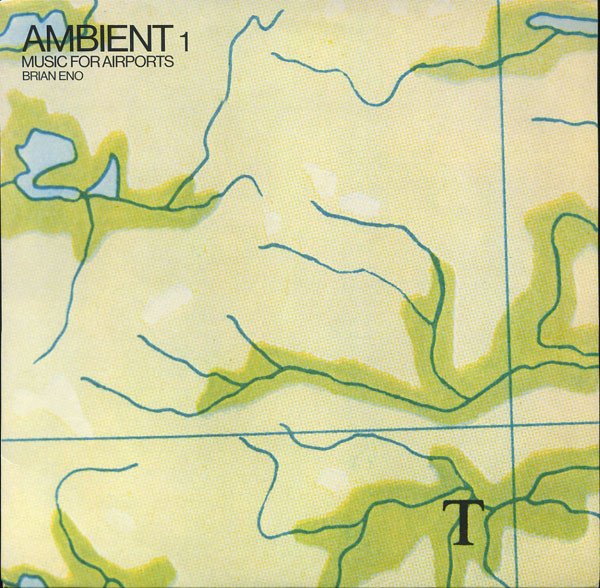
Ambient 1: Music for Airports wears one of Eno's own diagrammatic artworks — pale horizontal bands that read almost like a score or a flight schedule. The sleeve states its thesis before a note plays: sound designed to sit in the background, as calm as the graphic itself.
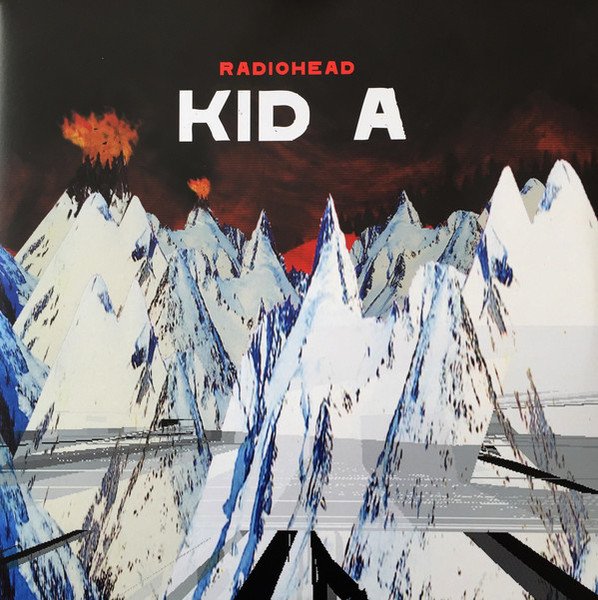
Donwood and Yorke made the Kid A landscapes by building up wax and paint and then cutting into it with knives — jagged red and white peaks that look like a terrain map of somewhere hostile. The artwork was made during the same sessions as the music, in the same frame of mind.